
Jan Elvis
03.11.2025

Jan Elvis
03.11.2025
Tackling oily skin is all about finding the right balance—you want to manage the shine without completely stripping your skin of its natural, protective oils. The secret isn't a complex, 10-step process. It’s a straightforward, four-part routine: cleanse, treat, hydrate, and protect. Stick with it, and you'll see a real difference.

Let's be real—dealing with a shiny T-zone and surprise breakouts gets old fast. A lot of guys fall into the trap of grabbing the harshest scrub they can find, thinking they need to obliterate every last drop of oil. But that aggressive approach just makes things worse. Your skin panics and kicks oil production into overdrive to make up for the dryness, leaving you shinier than before.
A smart routine works with your skin, not against it.
Before you start buying products, you need to be 100% sure you actually have oily skin. It's easy to misdiagnose. What looks like an oil slick could be combination skin (oily in some spots, dry in others) or even dehydrated skin overcompensating. Using the wrong stuff will just lead to frustration. Not sure where you land? Check out this guide on how to tell your skin type.
And you're not alone in this. The market for oily skin products is expected to reach USD 10.3 billion by 2034, with young adults and teens making up a massive 45.9% of that. It's a common battle.
For a deeper dive into what's happening beneath the surface, this article on What Causes Oily Skin And How To Manage It is a great resource.
Key takeaway: The goal isn't to get rid of oil entirely. A healthy amount protects your skin. We're aiming for balance—controlling excess shine while keeping pores clear and breakouts at bay.
Think of this guide as your no-nonsense playbook. We're breaking down a simple, effective routine that gets the job done.
Here’s a quick overview of what your daily game plan will look like.
| Routine Step | Morning Action | Evening Action |
|---|---|---|
| Cleanse | Use a gentle, foaming cleanser. | Double cleanse: start with an oil-based cleanser, follow with a water-based one. |
| Treat | Apply a toner with salicylic acid or niacinamide. | Use a targeted treatment like a spot treatment or a gentle exfoliating serum. |
| Hydrate | Use a lightweight, oil-free moisturizer. | Apply a gel-based or water-cream moisturizer. |
| Protect | Finish with a non-comedogenic SPF 30+ sunscreen. | (Not applicable) |
This simple framework is your foundation. Now, let’s get into the specifics of each step.
The way you wash your face can either set you up for success or make your oil problem worse. A lot of guys with oily skin make the same mistake: they grab the harshest, most aggressive face wash they can find, thinking they can scrub the shine away. Big mistake.
When you strip your skin like that, you’re damaging its natural moisture barrier. This sends your skin into a panic, causing it to produce even more oil to make up for what it lost. It's a vicious cycle.
Instead of fighting your skin, you need to work with it. The goal is to find a smart balance—a cleanser that gets rid of the excess oil, sweat, and grime without leaving your face feeling tight, dry, and irritated.
For most guys with oily skin, a gentle foaming cleanser is the perfect starting point. The real MVP ingredient to look for is salicylic acid. It’s a beta-hydroxy acid (BHA) that doesn't just clean the surface; it gets deep inside your pores to break down all the gunk that causes breakouts in the first place. Seriously, it's a game-changer.
If you want a deeper dive into how this works, our guide on how to clean out pores has you covered.
It’s no surprise that more people are looking for smarter, safer ingredients. The global organic skin care market hit a value of USD 12.57 billion in 2024, and a big reason is that people are tired of harsh synthetic chemicals. These newer formulas use natural ingredients to manage oil without irritation, which is exactly what reactive, oily skin needs. You can discover more insights about this trend in organic skin care.
Pro Tip: Think about your post-gym routine. You need something strong enough to cut through all that sweat and bacteria, but an aggressive wash will just make things worse. A salicylic acid cleanser is your best friend here.
What you use is only half the battle; how you use it is just as crucial. A few small tweaks to your technique can make a massive difference in keeping that shine under control all day.
Use Lukewarm Water. I get it, hot water feels great, but it strips away your skin's essential oils. This just kicks that oil-production cycle into overdrive. Stick to lukewarm.
Wash for 60 Seconds. Don't just splash some water on your face and call it a day. Take a full minute to gently massage the cleanser into your skin. This gives the active ingredients, like salicylic acid, enough time to actually do their job.
Pat, Don't Rub. When you're done, grab a clean towel and gently pat your face dry. Aggressively rubbing your skin can create tiny tears and cause irritation—exactly what you want to avoid.
Alright, cleansing is your foundation, but if you're serious about getting that oil and shine under control, it's time to bring in the big guns. This is where treatments—like serums and exfoliants—come into play. Think of them as your secret weapons for tackling specific problems head-on.
Don't worry, this isn't about some complicated, 20-minute ritual. It's about being strategic with one or two products that do the heavy lifting for you. Adding them to your routine is simple, but the payoff is huge.
Your first move should be a lightweight serum. I always recommend finding one with niacinamide, which is a total game-changer for regulating your skin’s oil production over time. As a bonus, it helps make your pores look smaller and generally evens out your skin's texture.
Just a few drops after cleansing is all you need. Pro-tip: apply it while your skin is still a little damp. This helps it sink in much faster and get to work. It’s a quick step that makes a real difference in keeping your skin balanced all day.
The visual guide below breaks down a few other simple but crucial habits for keeping your skin happy.
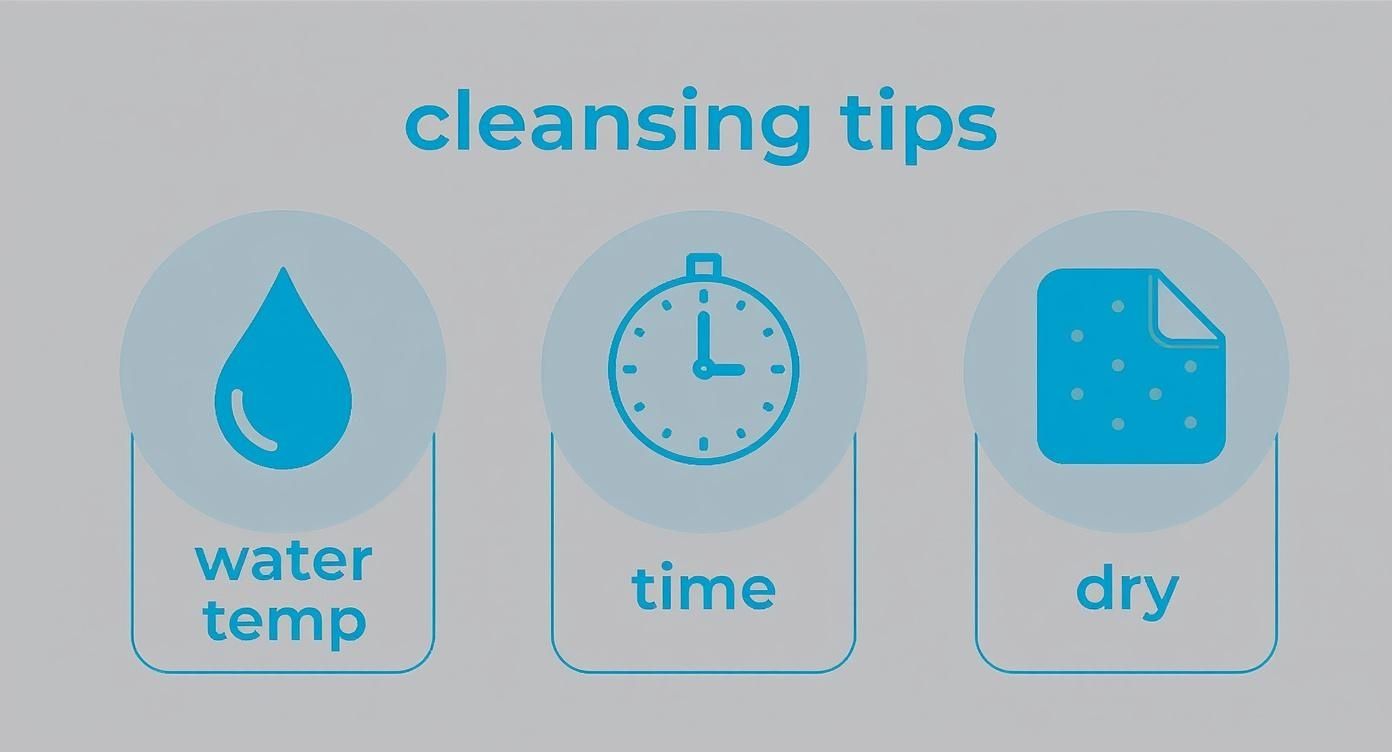
These little things—using lukewarm water, washing your face for a full minute, and gently patting it dry—really support what your treatments are doing. They prevent the kind of irritation that can actually trigger even more oil.
Next up is your best defense against breakouts: a chemical exfoliant. Forget those harsh, gritty face scrubs that feel like sandpaper. What you really need is a product with salicylic acid. This stuff is brilliant because it gets deep inside your pores to dissolve all the oil and dead skin that cause blackheads and pimples.
It’s no surprise that in the United States, about 20% of men say acne is a major skin concern. Most routines for oily skin zero in on exfoliants to prevent clogged pores and lightweight hydrators to manage shine—the two biggest issues guys tend to deal with. You can check out the full research on men's skincare concerns if you want to dig deeper.
How to Use It: The key here is not to overdo it. Start by using your salicylic acid treatment just two or three times a week at night, right after you cleanse. This gives your skin time to get used to it and helps you avoid any redness or irritation.
Now, let's look at some of the most effective ingredients you'll find in treatments for oily skin.
When you're scanning product labels, these are the names you want to look for. Each one targets oil and breakouts in a slightly different way.
| Ingredient | What It Does | How Often to Use |
|---|---|---|
| Salicylic Acid (BHA) | Exfoliates inside pores, dissolves oil, and clears blackheads. | 2-3 times per week, building up if needed. |
| Niacinamide | Regulates oil production, reduces pore size, and calms redness. | Daily, morning and/or night. |
| Glycolic Acid (AHA) | Exfoliates the skin's surface to improve texture and fade marks. | 1-3 times per week, typically at night. |
| Retinoids | Speeds up cell turnover to prevent clogged pores and treat acne. | Start with 1-2 times per week at night and increase slowly. |
Choosing the right active ingredient is about understanding what your skin needs most. By adding these simple but powerful treatments, you’re not just washing your face—you’re actively taking control of oil production and stopping future breakouts before they even start.
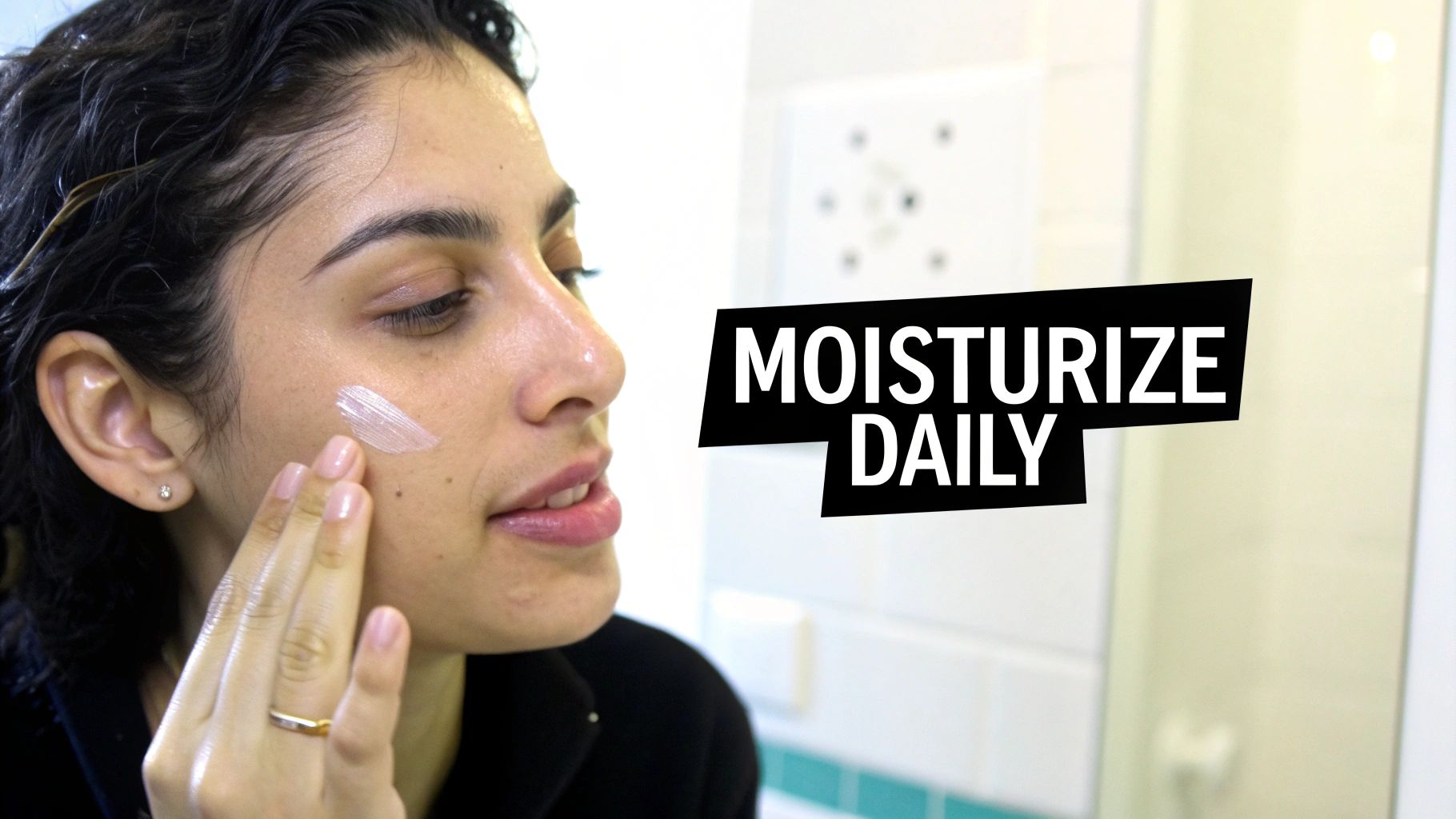
I know it sounds completely backward, but skipping moisturizer is one of the worst things you can do for oily skin. It's a classic mistake.
Here’s what happens: when your skin gets dehydrated, its internal alarm bells go off. It panics and starts pumping out even more oil to compensate for the missing moisture. This kicks off a vicious cycle where you feel greasier as the day goes on, no matter how much you scrub your face.
The answer isn't to dry your skin out. It's to give it the right kind of hydration. A heavy, thick cream will feel like a grease mask, but a modern, lightweight formula is a non-negotiable part of a solid oily skin care routine.
The key is to look for products specifically labeled as oil-free and non-comedogenic. That’s just a fancy way of saying they’re built to not clog your pores—a huge deal when you're already prone to breakouts.
Here’s what you want to see on the ingredient list:
If you need a starting point, checking out some of the best face cream for men can help you find products designed exactly for this.
Pro Tip: Apply your moisturizer when your skin is still slightly damp from washing. Don't wait until it's bone-dry. This simple trick helps lock in that surface-level water, giving you a bigger hydration boost that keeps you balanced and shine-free for hours.
Alright, let's talk about the one step most guys with oily skin are tempted to skip: sunscreen. I get it. The thought of slathering on a thick, greasy lotion that leaves you looking like a shiny disco ball is a major turn-off.
But here’s the reality: skipping daily sun protection is sabotaging all the other work you're putting in. Sun damage isn't just a future problem; it actively makes oily skin worse right now. It can crank up inflammation, which often means more breakouts.
Even worse, sun exposure takes those annoying dark spots left behind by old pimples and makes them stick around for much, much longer.
The good news is that sunscreen technology has come a long way. You no longer have to settle for that greasy mask feeling. The key is finding a lightweight formula designed for skin like yours.
Here’s what to look for:
Mineral Sunscreens: These are your physical blockers, using ingredients like zinc oxide. They work by sitting on the skin's surface to deflect UV rays. They're often a great choice if your skin is also sensitive or easily irritated.
Oil-Free Chemical Sunscreens: These absorb UV rays and convert them into heat. The magic words to look for on the bottle are "non-comedogenic," which is just a fancy way of saying it won't clog your pores.
If you want to find something that actively combats shine, it's worth looking into specialized sunscreen options that provide a matte finish without feeling heavy.
Forget the old wives' tale that the sun "dries out" pimples. That's a total myth. All it really does is damage your skin, making acne worse and recovery slower. Your best weapon against this is a daily SPF.
Finding a sunscreen you don’t hate wearing every single day is the final, crucial piece of the puzzle. It locks in all your progress and protects your skin for the long haul.
Starting a new skincare routine always brings up questions. When you're dealing with oily skin, a few key concerns seem to pop up for every guy. Getting straight answers is the best way to make sure you stick with the plan and actually understand what’s going on with your skin.
It’s easy to get frustrated if you don't see a huge difference overnight. The key is to manage your expectations and trust the process. Let’s tackle some of the most common questions men have when they finally decide to get their oily skin under control.
You'll probably notice your skin feels less like an oil slick within the first week or two. That immediate drop in shine is usually the first sign you're on the right track.
But for the bigger changes—like fewer breakouts and pores that don't look so obvious—you’ve got to play the long game. Give your new routine a solid 4 to 6 weeks of consistent, daily use. Active ingredients like salicylic acid need time to really get in there and clear things out. Your skin also has its own turnover cycle, so you need to give it a full run before you can judge whether the products are truly working.
Absolutely. There's no getting around it. While genetics definitely deal you a certain hand when it comes to oil production, your daily habits can either make things way better or way worse.
Your skin is basically a billboard for what's happening inside your body.
Making small tweaks, like swapping soda for water and finding ways to de-stress, gives your skincare products a much better chance to do their job effectively.
The bottom line is simple: a great skincare routine is powerful, but it works best when you pair it with healthy habits. You can’t out-cleanse a bad diet or chronic stress forever.
Yes, and there’s a very good reason why. Your morning and evening routines are designed for two totally different missions.
Your morning routine is all about protection. You’re starting with a light cleanse to get rid of any sweat and oil that built up overnight. Then, you're layering on a lightweight moisturizer and—the most important part—sunscreen. This combo preps your skin to handle everything the day throws at it, from pollution to UV rays.
At night, the focus shifts to repair and treatment. This is when you need a more thorough cleanse to wash away all the grime from the day. It’s also the perfect time to use your heavy-hitting treatments, like a salicylic acid exfoliant or a serum with niacinamide. They can work their magic without interruption while you sleep. The only thing you skip at night is the SPF.
Ready to take control of your routine with products designed for you? Main Character offers straightforward, effective skincare to help you build confidence and feel your best. Find your new routine at https://www.dontlooktrash.com.

05.12.2025
How to Stay Focused at Work 7 Actionable Tips
04.12.2025
A Guide to Shaving with Sensitive Skin
03.12.2025
Best Grooming Products for Men A Definitive Guide
02.12.2025
How to Build Confidence for Men: Practical Guide
01.12.2025
Face Lotion With SPF Your Guide to Daily Skin Protection
30.11.2025
Natural Skin Care Products Men Can Trust
29.11.2025
How to Maintain Healthy Skin A No-Nonsense Men's Guide
28.11.2025
what causes dark circles under eyes: tips and fixes