
Jan Elvis
04.12.2025

Jan Elvis
04.12.2025
Shaving with sensitive skin can feel like a no-win situation. You're stuck in a frustrating cycle of redness, bumps, and irritation that just won't quit. But here’s the thing: that irritation isn't random. It’s a direct response to two things—the physical friction from your razor and the chemical ingredients in your products.
Once you figure out what your specific triggers are, you can build a routine that stops the discomfort before it even starts. The goal is to turn a dreaded daily chore into a calm, soothing ritual.
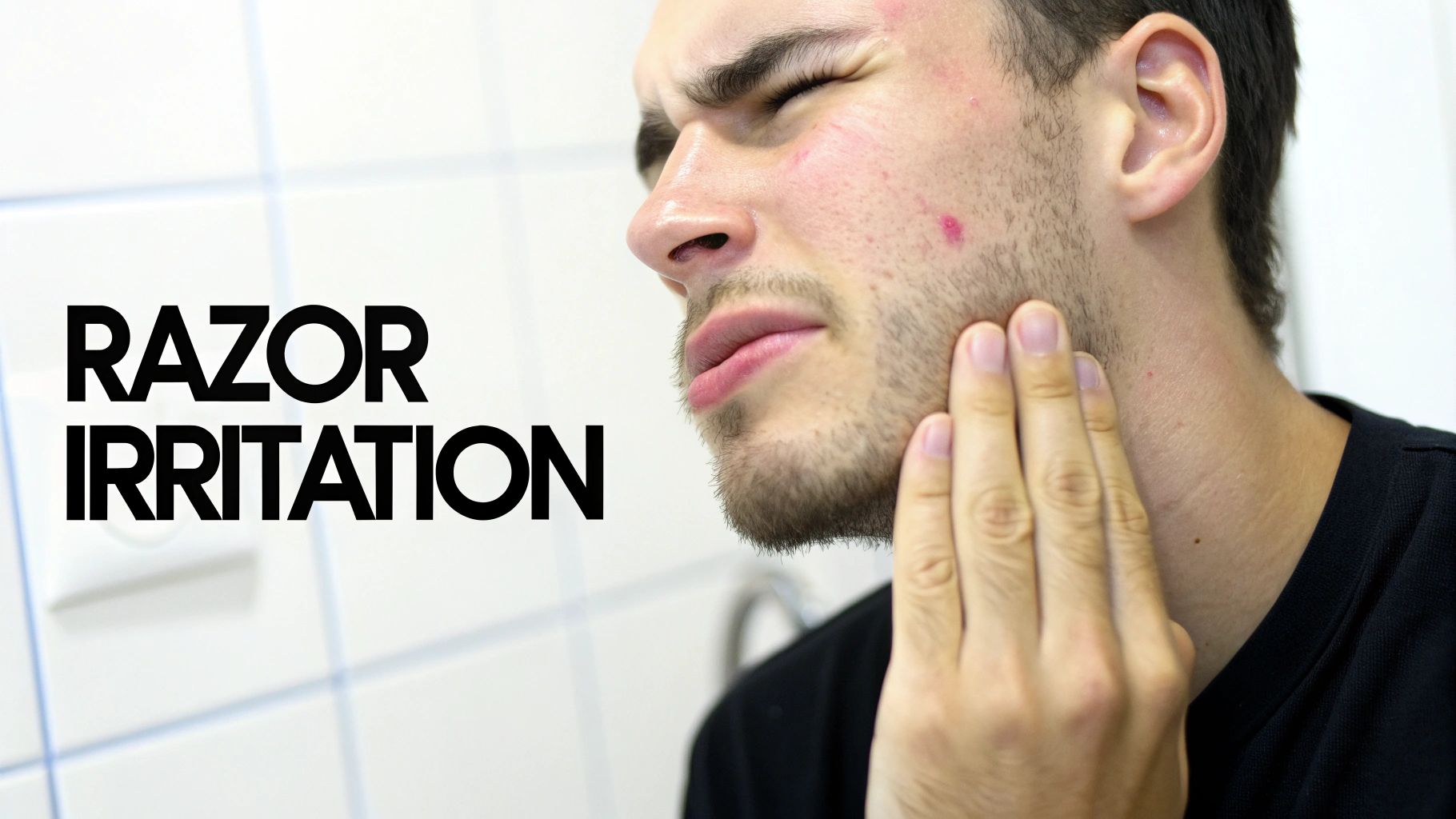
If every shave leaves your face feeling raw and looking angry, you're definitely not alone. For a lot of guys, shaving is less about grooming and more about bracing for impact. So, why does your skin flare up when others seem to glide through their shave without a problem? It all comes down to your skin's protective barrier.
Think of your skin as having a natural shield, a lipid barrier that keeps moisture locked in and irritants locked out. Sensitive skin often has a weaker, thinner version of this shield. When you shave, you’re not just trimming hair; you’re scraping off the very top layer of skin cells and their protective oils. For someone with tough skin, it’s no big deal. For you, it’s a full-on attack that triggers a red, painful inflammatory response.
This heightened sensitivity isn't just bad luck. It often stems from a few key factors. Sometimes it’s simply genetic—you were born with skin that's more reactive. Other times, specific conditions or habits are making your skin more vulnerable to the blade.
To really get a handle on why shaving is such a battle, it helps to understand what causes skin sensitivity in the first place. This knowledge is your foundation for spotting your personal triggers. It’s such a common problem that many people simply shave less often or give up entirely, which is pushing brands to finally create gentler, more thoughtful products.
Not all post-shave misery is created equal. To find the right fix, you need to correctly diagnose the problem. Are you seeing immediate redness? Delayed bumps? Or painful, trapped hairs? Each one has a different cause and requires a unique game plan.
One of the biggest mistakes I see is people treating every single red mark as "razor burn." When you can tell the difference, you can stop wasting money on random products and start using targeted solutions that actually solve the issue.
Let's quickly break down the common culprits so you know exactly what you're up against.
This table is a quick reference guide to help you distinguish between the three most common post-shave issues.
| Ailment | Appearance | Primary Cause | Key Prevention Tip |
|---|---|---|---|
| Razor Burn | Immediate redness, stinging, inflammation, or rash-like appearance. | Friction from a dull blade, excessive pressure, or lack of lubrication. | Always use a sharp, clean blade and a high-quality shaving cream or gel. |
| Razor Bumps | Small, red, acne-like bumps that appear hours or days after shaving. | Shaved hairs that curl back and grow into the skin, causing inflammation. | Exfoliate gently 2-3 times a week to prevent dead skin buildup. |
| Ingrown Hairs | Hairs trapped beneath the skin's surface, often forming a painful, raised bump. | Coarse or curly hair types are more prone; also caused by clogged follicles. | Shave with the grain of hair growth and avoid stretching the skin taut. |
Knowing the difference is a game-changer. It shifts your mindset from being reactive—always trying to calm down angry skin—to being proactive. The goal from here on out is to build a shaving routine so smooth and gentle that razor burn, bumps, and ingrown hairs simply don't stand a chance.
A truly comfortable shave, especially when you’re dealing with sensitive skin, is won or lost before the razor even touches your face. If you just slap on some cream and start hacking away, you're basically asking for redness and irritation.
Think of your pre-shave routine as building a crucial line of defense. It’s a buffer zone that protects your skin from the friction and stress of the blade. This isn’t about adding complicated steps just for the sake of it; it's a smart approach to soften your beard, lubricate your skin, and clear away anything that could cause the razor to drag or nick. Spend a few extra minutes here, and you’ll completely change the outcome.
The single best thing you can do is shave right after a warm shower. The steam and heat are your best friends, working together to make everything easier.
First, the warmth opens up your pores and just helps your skin relax. More importantly, it lets your facial hair soak up water. A fully hydrated hair strand is up to 30% weaker and swells up a bit, making it dramatically softer and easier for a razor to slice through cleanly. That means less pulling and a much smoother glide.
No time for a shower? Fake it. Soak a clean washcloth in warm—not scalding—water, wring it out, and just press it against your face for a couple of minutes. This simple move preps the canvas perfectly.
Once your skin is warm and damp, you need to make sure the surface is as smooth as possible. Dead skin cells, oil, and grime can clog your razor in an instant, leading to drag and uneven pressure, which are major triggers for irritation.
I know "exfoliation" can be a scary word when your skin is reactive. Forget those aggressive, gritty scrubs; they'll just create micro-tears and inflammation. The goal here is gentle exfoliation. You want a mild chemical exfoliant or a super fine-grained physical scrub that’s made for sensitivity.
Think of it like this: you wouldn't try to paint a dusty wall and expect a perfect finish. Exfoliating is just wiping the slate clean so your razor can do its job without hitting any speed bumps.
Use light, circular motions and only do this two or three times a week, max. Overdoing it will strip your skin's protective barrier and make things worse. For more help finding the right product, check out our guide on choosing an exfoliating face wash for sensitive skin.
This is the step most people skip, and it's a total game-changer for preventing razor burn. Applying a pre-shave oil or a conditioning cream creates an extra slick barrier between your skin and your shaving cream.
This layer helps the razor glide instead of scrape. The oil cushions your skin, reducing that harsh, direct contact with the blade's edge while still letting you get a close cut. It's this reduction in friction that your reactive skin craves.
Look for non-comedogenic oils that won't clog your pores. A few of my go-tos are:
Just work a few drops into your damp skin and massage it in for about 30 seconds. Let it sink in for a minute before you apply your shaving cream right over the top. It’s a small step that creates a powerful shield, setting you up for your most comfortable shave yet.
Even with the best prep in the world, the wrong technique can instantly turn a promising shave into a painful one. How you hold the razor, the direction you shave, and the pressure you apply are every bit as important as the products you use. This is where we move from theory to practice.
Getting a comfortable shave isn't about speed; it's about control and intention. It’s a skill that takes a little patience to develop, but once you nail these gentle methods, you'll dramatically cut down on the chances of ending your shave with a red, stinging face.
Before we dive into the technique itself, remember that it builds on a solid foundation. This is what your pre-shave ritual should look like:
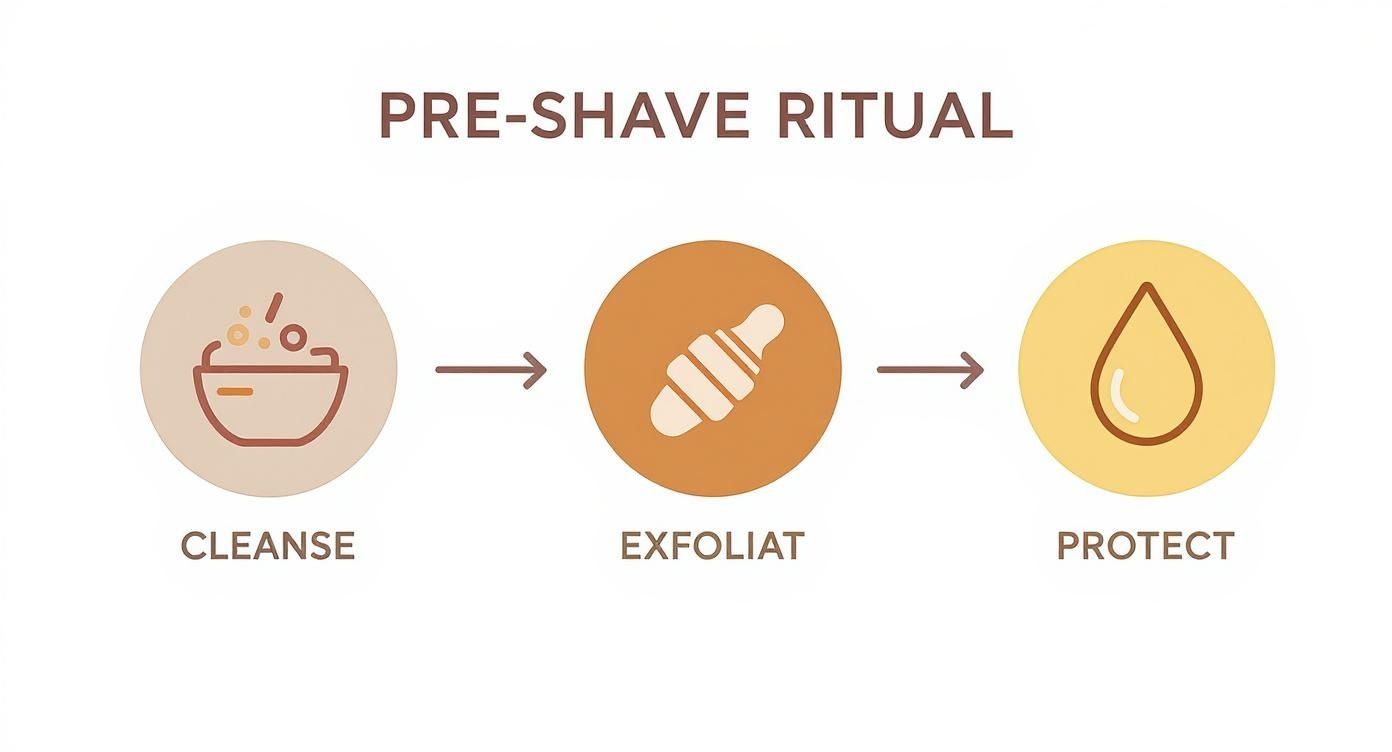
Cleansing, exfoliating, and protecting your skin creates the ideal canvas for your razor to glide over smoothly.
"Shave with the grain" is probably the most common piece of advice out there, but a surprising number of people don't actually know what that means for their own face. Your facial hair doesn't grow in one neat, uniform direction. It often swirls and changes direction, especially around the jawline and neck.
Before you even think about picking up the razor, take a minute to feel your stubble. Run your fingers across your cheeks, chin, and neck. The direction that feels smoothest is "with the grain." The direction that feels rough and provides resistance is "against the grain." This is your personal hair growth map.
For sensitive skin, shaving with the grain is non-negotiable. It creates the least amount of resistance and reduces the odds of the blade catching and pulling on the hair—a primary cause of irritation and ingrown hairs. Sure, going against the grain might feel like it gets you a closer shave, but the price you pay in redness and razor bumps just isn't worth it.
The razor aisle is a confusing place, with options ranging from old-school single-blade razors to five-bladed contraptions that look like they belong on a spaceship. There's no single "best" razor for everyone, but for sensitive skin, the choice boils down to balancing closeness with comfort.
Don't be afraid to experiment to find what feels right for you, but whatever you choose, make sure the blade is sharp and clean. A dull blade is the number one enemy of sensitive skin. It tugs, pulls, and scrapes instead of cutting cleanly.
A common misconception is that more blades equal a better shave. For sensitive skin, the opposite is often true. The goal is to cut the hair with the least amount of skin contact possible, and a single, sharp blade often does that most effectively.
Okay, you've got the right tool and you've mapped your grain. The final piece of the puzzle is your physical technique. This is where a light touch changes everything.
The natural instinct is to press down hard to get a closer shave, but that's a critical mistake. Pressing the razor into your skin just forces the blade to dig into your top layer of skin, causing micro-abrasions and inflammation. Instead, focus on using light, short, and controlled strokes.
Hold the razor gently and let its own weight guide it across your face. Think of it as gliding over the skin, not plowing through it. After every one or two strokes, rinse the blade under hot water. This clears away the gunk—hair and shaving cream—and ensures the blade can cut efficiently without clogging, which is what leads to that awful dragging and pulling sensation.
This gentle approach might feel like it takes a bit longer at first, but the results are immediate. You’ll notice less redness, less stinging, and a much more comfortable post-shave experience. This isn't just a shaving tip; it's a fundamental shift in how you treat your skin.
When you have reactive skin, walking down the grooming aisle feels like a high-stakes guessing game. One wrong move, one irritating ingredient, and you're stuck with a face full of red, angry skin. The secret isn't just grabbing the first bottle that says "for sensitive skin"—it's about learning to read the fine print and understand what your face is actually asking for.
This is about building an arsenal of products that actively calm and protect your skin, not just lubricate it for a shave. By focusing on gentle, anti-inflammatory ingredients while sidestepping known irritants, you can build a routine that actually supports your skin's health. You’re not alone in this; millions of people are now prioritizing gentle formulations, a shift you can see in recent shaving statistics.
Your first move is to become a savvy label reader. The marketing claims on the front of the bottle are one thing, but the ingredient list on the back is where the truth lies. For sensitive skin, you want to see names that sound like they belong in a garden, not a chemistry lab.
These are the heroes your skin is looking for:
Think of your shaving product as a treatment, not just a tool. The right ingredients don't just help the razor glide; they actively work to reduce inflammation and heal the micro-abrasions caused by shaving.
Just as important as knowing what to look for is knowing what to run from. Certain ingredients are notorious for stripping your skin’s natural oils, causing dryness, and triggering flare-ups. Being able to spot these villains is a game-changer.
Your primary mission is to steer clear of these culprits:
Ditching these ingredients dramatically lowers your risk of post-shave redness. If that's a battle you're constantly fighting, our guide offers specific strategies on how to get rid of redness that go even deeper.
Now, let's put this all together in a quick reference guide.
Here’s a simple breakdown of the good guys and the bad guys to look for on any product label.
| Ingredient Category | Look For (Soothing) | Avoid (Irritating) |
|---|---|---|
| Moisturizers | Glycerin, Shea Butter, Hyaluronic Acid: These hydrate and create a protective barrier, reducing friction. | Mineral Oil: Can be heavy and potentially clog pores for some, though it's less of a direct irritant. |
| Cleansers/Foamers | Cocamidopropyl Betaine: A gentle surfactant derived from coconut oil that cleanses without stripping. | Sulfates (SLS/SLES): Harsh detergents that strip natural oils, leading to dryness and irritation. |
| Soothing Agents | Aloe Vera, Chamomile, Allantoin, Niacinamide: Actively calm inflammation, reduce redness, and promote healing. | Menthol/Peppermint Oil: Can provide a cooling sensation but are often too intense and irritating for sensitive skin. |
| Preservatives/Additives | Phenoxyethanol: A gentler, widely used preservative that's less likely to cause reactions. | Synthetic Fragrance/Parfum: A leading cause of allergic contact dermatitis. Can hide dozens of chemical irritants. |
| Alcohols | Cetyl/Stearyl Alcohol: These are "fatty alcohols" that are non-drying and actually help moisturize the skin. | SD Alcohol/Denatured Alcohol: Very drying and can cause a stinging sensation, compromising the skin barrier. |
Keep this cheat sheet handy when you're shopping. It makes scanning ingredient lists a whole lot faster and helps you make choices that your skin will thank you for.
The texture of your shaving product also plays a huge role in your comfort. While a lot of it comes down to personal preference, each formula offers distinct advantages for sensitive skin.
Creams are usually the top pick. They’re rich, dense, and packed with moisturizing ingredients that create a thick, protective cushion between your skin and the blade. This superior lubrication is exactly what sensitive skin needs to minimize friction and prevent nicks.
Gels are a close second. They're typically lighter than creams but still provide excellent glide. Many are formulated with cooling agents like aloe for immediate relief—just make sure you find an alcohol-free formula.
Foams, the kind that often come in aerosol cans, are generally the least suitable option. They tend to be much more drying and are filled with more air than protective ingredients, offering a thin barrier that doesn't do you any favors against razor burn.
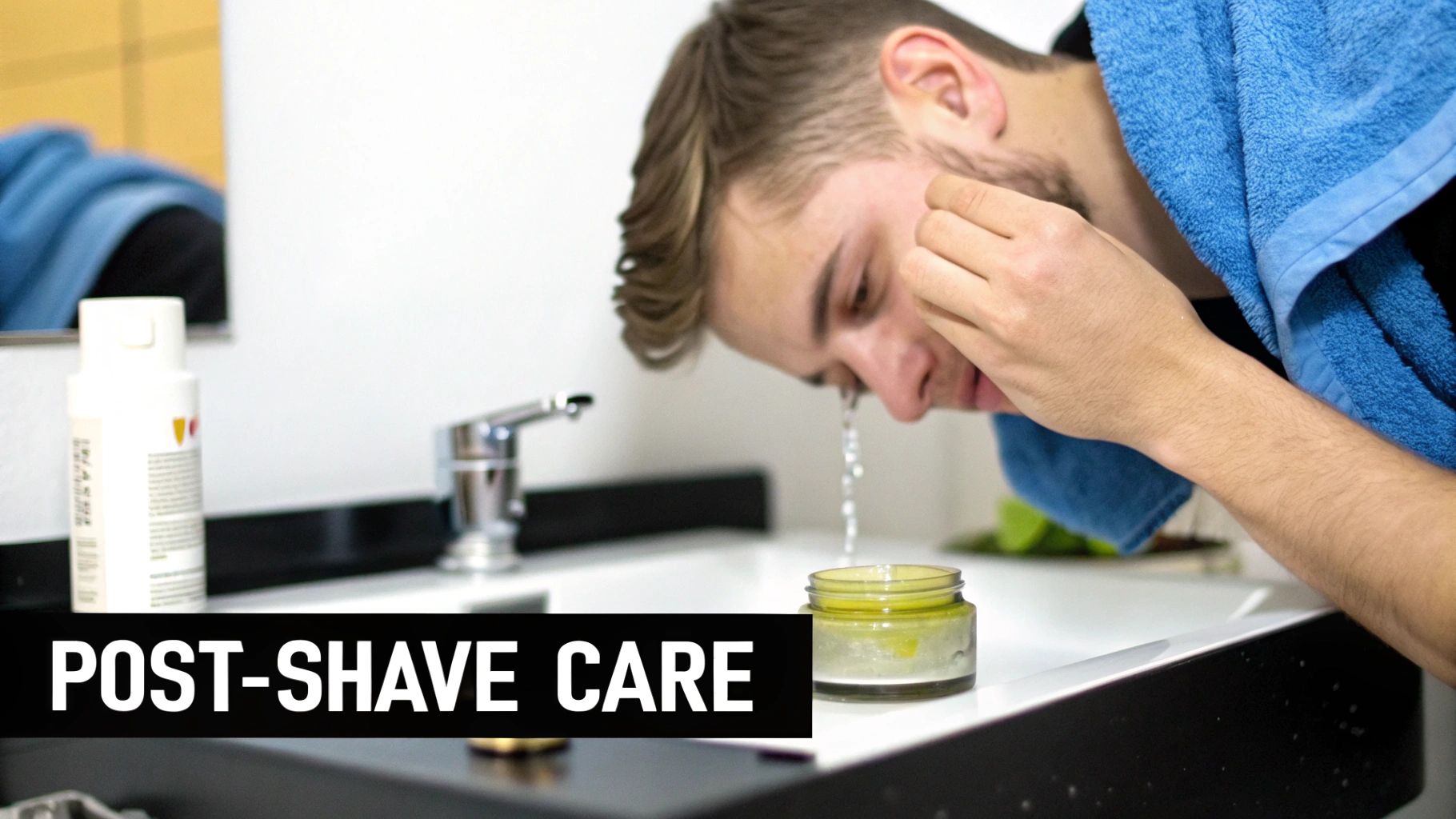
The shave itself is only half the battle. What you do in the minutes right after is what really makes or breaks the experience. This is your chance to either lock in a calm, comfortable finish or accidentally set the stage for a day of redness and irritation.
Think of your freshly shaved skin as vulnerable. It's just been exfoliated and is more exposed to the elements. Your recovery plan is all about giving it exactly what it needs to heal quickly and stay resilient.
First things first: rinse your face with cool water. While warm water was your best friend during prep, cool water is what you need now. It helps constrict blood vessels, which is a simple way to immediately dial down any redness and puffiness.
This cool rinse also helps close up your pores, making them less likely to get clogged with dirt or bacteria. Once you're done, grab a clean, soft towel and gently pat your skin dry. Whatever you do, don't rub. That friction is a one-way ticket to irritation. The trick is to leave your face just slightly damp, creating the perfect canvas for your aftercare products to really sink in.
This is a critical turning point where so many guys with sensitive skin go wrong. They reach for that old-school, alcohol-heavy aftershave splash, brace for the sting, and assume that burning sensation means it's working. For skin like ours, that sting is actually a cry for help.
Alcohol-based splashes strip away your skin's natural oils, leaving it dry and compromising its protective barrier. A post-shave balm is designed to do the complete opposite—it’s a moisturizing, healing product made to soothe and repair.
Choosing a balm over a splash is the single most impactful switch you can make in your post-shave routine. One is designed to disinfect through harshness; the other is engineered to heal through nourishment. Your sensitive skin will always prefer the latter.
This shift toward gentle, nourishing products is happening across the entire grooming industry. The post-shave care market, valued at around USD 3.7 billion in 2025, is projected to hit USD 6.4 billion by 2035. That growth is fueled by people like us who are actively looking for balms and moisturizers with natural, soothing ingredients made for sensitive skin.
So you've got a quality, alcohol-free balm. Now, how you apply it matters. You only need a pea-sized amount on your fingertips—a little really does go a long way.
Rub your hands together for a second to warm the product up, then gently massage it into the shaved areas. Use light, upward circular motions. This gentle massage helps stimulate blood flow and ensures the balm gets absorbed deeply instead of just sitting on the surface. Give some extra love to your neck and jawline, since those are hotspots for irritation and those dreaded ingrown hairs. If you're constantly fighting those bumps, our detailed guide on how to prevent ingrown hairs can help.
Let the balm soak in for a minute or two before you put anything else on, like sunscreen. You should feel your skin start to calm down almost immediately. And remember, for overall skin health, incorporating a consistent sensitive skin care routine is key.
Great post-shave care is also about playing the long game. It means listening to your skin and knowing its limits.
By combining these immediate actions with a smart, long-term approach, you turn post-shave care from a chore into a strategy. This final step is what ultimately keeps your skin calm, healthy, and comfortable for the long haul.
Even when you think you've got the perfect routine down, questions always come up. Shaving with sensitive skin is often a game of trial and error, and it helps to have a guide for those moments. We’ve pulled together the most common questions we get, with real-world answers to help you get that consistently comfortable shave.
Think of this as your troubleshooting manual. Getting these small details right is often what turns a decent shave into an amazing one.
Here's the golden rule for sensitive skin: never, ever use a dull blade. A dull blade doesn’t slice cleanly through hair; it tugs and scrapes across your skin, which is a one-way ticket to irritation city. The marketing on the package might promise a certain number of shaves, but your face is the only thing you should listen to.
For most cartridge razors, plan on changing the blade after just 3 to 5 shaves. If your hair is particularly coarse, you might need to swap it out even sooner. And if you’re using a single-blade safety razor? The blades are so inexpensive that changing them after 1 or 2 shaves is a no-brainer. It's one of the smartest investments you can make to prevent irritation.
Trust the feeling. The second you feel any pulling, dragging, or notice more redness than usual, that blade is done. Don't try to get one more shave out of it—your skin will be the one to pay for it.
For some guys with extremely reactive skin, an electric razor can be a lifesaver. Instead of cutting hair below the skin's surface, they trim it right at the surface level. This drastically cuts down on blade-on-skin friction and pretty much eliminates the risk of nicks.
You'll generally find two types:
What's the catch? You likely won't get that same baby-smooth feeling you get from a manual blade. But if your main goal is to sidestep razor burn and ingrown hairs, going electric could completely change your daily grooming game. You might need to experiment to see which style your skin prefers.
Hands down, the best time to shave is in the morning, right after a hot shower. Your skin has had all night to calm down and de-puff, so it’s more relaxed and ready for a blade than at the end of a stressful day.
The real magic, though, is the steam from the shower. It softens up your facial hair and opens your pores, creating the perfect slick surface for the razor to glide over with minimal friction. Just shifting your shave time can make a surprisingly huge difference in how your skin feels afterward.
Building a routine that works with your sensitive skin is the ultimate form of self-care. At Main Character, we create grooming essentials to support your journey toward feeling good in your own skin. Explore our collection to find products designed to calm, protect, and empower you.
Find your new routine at https://www.dontlooktrash.com.

05.12.2025
How to Stay Focused at Work 7 Actionable Tips
03.12.2025
Best Grooming Products for Men A Definitive Guide
02.12.2025
How to Build Confidence for Men: Practical Guide
01.12.2025
Face Lotion With SPF Your Guide to Daily Skin Protection
30.11.2025
Natural Skin Care Products Men Can Trust
29.11.2025
How to Maintain Healthy Skin A No-Nonsense Men's Guide
28.11.2025
what causes dark circles under eyes: tips and fixes