
Jan Elvis
28.11.2025

Jan Elvis
28.11.2025
Let's get straight to it: you want to know what's causing the dark circles under your eyes, and the answer is almost never as simple as "you need more sleep." It’s better to think of them as a signal—a direct message from your body pointing to a mix of genetics, your daily habits, and even the way your face is built.
We're going to unpack the three main culprits behind them—actual pigment, visible blood vessels, and simple shadows—to get to the bottom of what's really going on.
Most guys immediately blame late nights for their dark circles. While a bad night's sleep definitely doesn't help, it's usually just one piece of a much bigger puzzle.
The skin under your eyes is some of the thinnest on your entire body. Because it's so delicate, it acts like an honest—and sometimes brutally honest—window into what's happening both inside your body and on the surface. Figuring out the real reason for your dark circles is the only way to find a solution that actually gets the job done.
To make this simple, we can sort the causes into three main buckets. Each one has a different origin story and, more importantly, requires a completely different game plan.
Pigmentation (Brown Circles): This is all about melanin, the natural pigment that gives your skin its color. When your body makes too much of it in one spot, you get a brownish tint under the eyes. This can be hereditary (thanks, Mom and Dad) or made worse by things like sun exposure and constantly rubbing your eyes.
Vascular Issues (Blue or Purple Circles): These circles are literally just your blood vessels showing through that super-thin under-eye skin. Things like poor circulation, dehydration, allergies, and yes, fatigue, can make these tiny vessels swell up and become way more noticeable.
Structural Shadows (Hollows): Sometimes, the "darkness" isn't about skin color at all. It's an actual shadow cast by your facial structure. If you have deep-set eyes or have lost a bit of natural fat and collagen under the eye (which happens to everyone over time), it can create a hollow that looks like a dark circle.
Here's a quick table to help you pinpoint what might be going on. It breaks down the main contributors to dark circles, helping you quickly identify potential reasons for their appearance.
| Cause Category | Primary Reason | Common Appearance |
|---|---|---|
| Pigmented | Excess melanin production | Brownish tint, often genetic or from sun damage. |
| Vascular | Visible blood vessels | Bluish or purplish hue, worse with fatigue/allergies. |
| Structural | Shadows from facial anatomy | Dark hollows caused by deep-set eyes or volume loss. |
By understanding these categories, you can better diagnose your own situation and find a treatment that targets the specific cause, not just the symptom.
The key takeaway here is that not all dark circles are created equal. Identifying your specific type is everything, because what works for a pigmentation issue is useless for a structural shadow.
Once you have a better idea of what you're dealing with, you can start building a real strategy. For most guys, a smart approach that combines a few lifestyle adjustments with targeted skincare, like a solid eye cream with active ingredients, can make a world of difference.
Now, let's dive deeper into each of these causes.
Not all dark circles are created equal. Knowing which type you’re dealing with is the absolute first step toward finding a solution that actually works. Think of it like this: you wouldn't use a hammer to fix a plumbing leak. Once you diagnose the real problem, you can stop wasting money on random creams and start targeting the root cause.
Most under-eye circles fall into one of three distinct categories. One is about skin color itself, another is about what's happening just beneath the skin, and the last one is basically an optical illusion created by the shape of your face. Understanding the difference is everything.
First, we have pigmented circles. These show up as a brownish or even grayish discoloration under the eyes. This isn't a shadow or a visible vein; it’s an actual change in your skin's color caused by an overproduction of melanin—the very same pigment that gives you a tan.
Essentially, it's like having a permanent, concentrated tan right in that one spot. It’s often genetic, so if your parents have them, there’s a good chance you will too. This type is especially common for guys with medium to darker skin tones.
A simple way to check for pigmented circles is the "stretch test." Gently pull the skin under your eye to the side. If the brown color stays put and doesn’t change, it’s almost certainly a pigmentation issue. Shadows, on the other hand, would lighten or disappear.
Common triggers for this type also include:
Next up are vascular circles, which have a distinct blue, purple, or sometimes reddish tint. These have nothing to do with skin color. Instead, they’re the result of tiny blood vessels and poor circulation showing through the incredibly thin skin under your eyes.
The skin here is some of the thinnest on your entire body. So, when blood pools in those tiny capillaries, they become much more visible, kind of like seeing a blue vein through a sheer piece of fabric. This effect is often made worse by:
Because this type is directly tied to blood flow, its appearance can fluctuate. One bad night of sleep or a flare-up of seasonal allergies can make these circles look way darker than the day before.
Finally, there are structural circles. These are probably the most misunderstood because they aren't about pigment or blood vessels at all. They are simply shadows cast by your natural facial anatomy.
This type is usually caused by a hollow or depression under the eye known as the "tear trough." As we get older, we naturally lose some of the fat and collagen that keeps this area looking plump and full. This volume loss creates a sunken appearance, and overhead lighting casts a shadow into that hollow, making it look dark. Some guys are just born with deeper-set eyes, which creates the exact same shadowing effect from a young age.
This diagram helps break down how to tell the difference between these main causes.
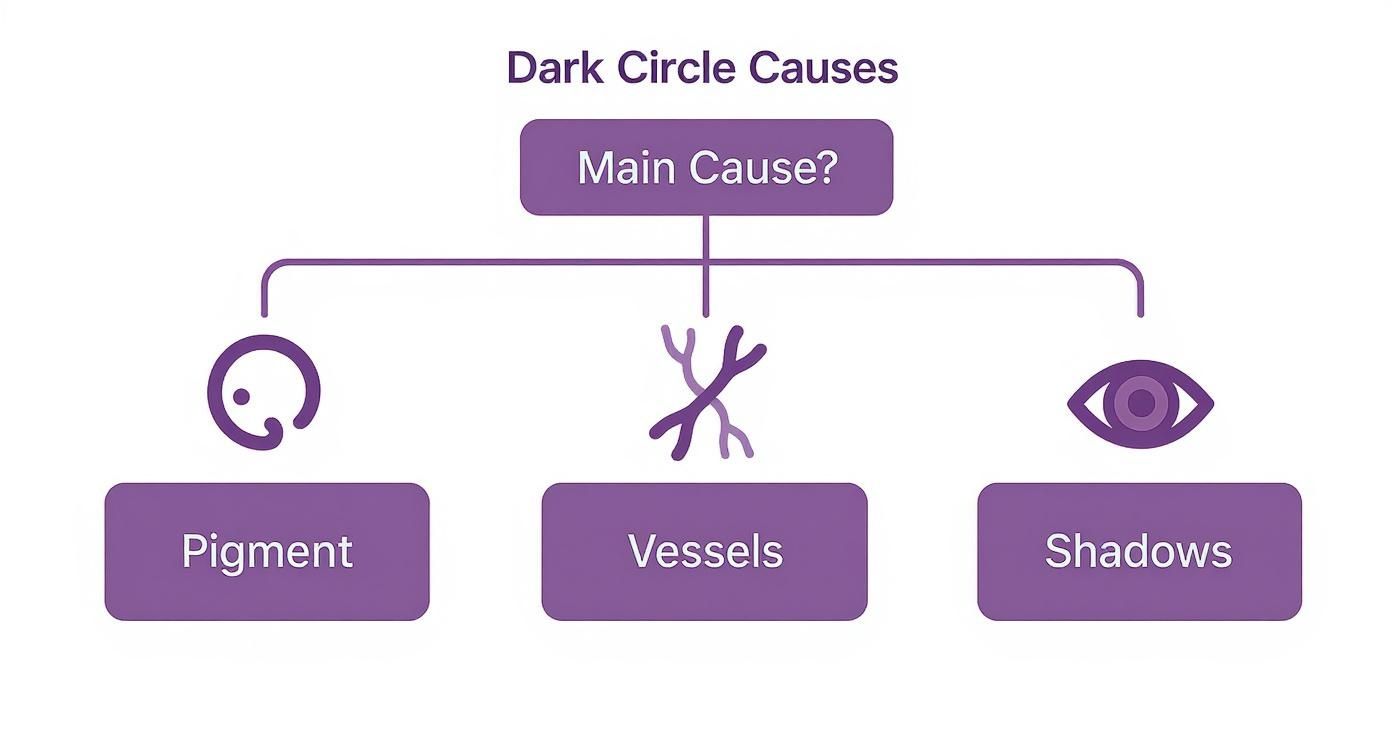
The takeaway here is crucial: your treatment has to match the cause. You can’t fix a shadow with a skin-lightening cream any more than you can fix poor circulation with a filler. Pigment issues need brightening ingredients, vascular issues need a boost in circulation, and structural shadows often need something to restore volume.
You can’t change your genes, but you absolutely have a say in the lifestyle habits that make dark circles worse. It goes way beyond the classic “get more sleep” line. Your daily routine can be the difference between faint shadows and deep, dark circles that make you look permanently tired.
Think of it like this: your body is a system, and the super-thin skin under your eyes is like a warning light on the dashboard. It’s one of the first places to show when something’s out of whack. Seemingly small habits can add up over time, creating the perfect storm for those dark circles.

Let’s get the obvious ones out of the way first. When you don't get enough quality sleep, your body's circulation gets sluggish. Blood starts to pool in the tiny vessels under your eyes, which then become much more visible through the skin. This is what creates that tell-tale bluish tint of vascular circles. Since this is such a common issue, understanding sleep's critical role in health is a game-changer.
Stress is the other half of this coin. When you’re wound up, your body pumps out cortisol. This stress hormone can increase blood flow and cause those under-eye blood vessels to widen, making them stand out even more.
A study of young adults found that a whopping 79.1% dealt with dark circles, and psychological stress was a major, statistically proven culprit. It’s a direct link: your mental state shows up under your eyes. Read more about these findings on the connection between stress and IOHP.
Because stress is such a huge trigger, learning how to reduce stress naturally is one of the best moves you can make for your appearance.
What you put into your body shows up on your face. Dehydration is a big one—when you’re low on water, your skin cells literally shrink. This makes the skin under your eyes look sunken and hollow, which immediately makes shadows look deeper.
On the flip side, a diet loaded with salt can make your body hold onto excess water, leading to puffiness that casts its own shadows and darkens the whole area.
And finally, let's talk about screen time. We all do it. Staring at a phone or laptop all day causes massive eye strain. That strain can make the blood vessels around your eyes swell up, darkening the skin.
Here's a quick rundown of the main lifestyle culprits:
Tackling these daily habits is the most practical way to fight back against dark circles. Small, consistent changes in your routine can make a surprisingly big difference over time.
So, you’ve tried everything. You’re getting your eight hours, chugging water, and taking screen breaks, but those dark circles are still staring back at you in the mirror. When lifestyle tweaks don’t make a dent, it's a sign that the root cause might be something deeper—either in your DNA or your overall health.
Figuring this out is the key to knowing whether the solution is in a new eye cream or a doctor's office.
For a lot of guys, dark circles are just part of the genetic lottery. The same way your genes hand you your hair color or height, they can also decide how thin or pigmented the skin under your eyes is.
This can play out in a couple of common ways:
Take a look at your family. If your parents or siblings have battled dark circles, there’s a good chance your genes are the main reason you have them too. It’s why some people have them even as kids, long before late nights and stress enter the picture.
Putting genetics aside, sometimes dark circles are your body's way of sending up a flare signal that something else is going on. These are less about your skin type and more about an internal issue that’s showing up on your face.
One of the biggest culprits? Allergies. Whether it’s seasonal pollen or dust mites, allergic reactions cause your body to release histamines. These compounds make your blood vessels swell up, and the ones under your eyes are no exception. The result is that puffy, shadowy look often called “allergic shiners.”
Nutritional gaps can also be the problem. An iron deficiency, for instance, can lead to anemia, which means your blood isn't carrying enough oxygen. Beyond genetic predispositions, several medical conditions can lead to dark circles, including deficiencies like what causes low iron levels. When your blood is poorly oxygenated, your skin can look pale and washed out, making the dark blue vessels under your eyes pop in stark contrast.
Nutritional deficiencies, especially iron deficiency anemia, are a known physiological cause of dark circles under the eyes. With an estimated 30% of the world's population suffering from anemia, it stands as a major global contributor to their appearance. You can learn more about how iron deficiency contributes to dark circles on Wikipedia.
In rarer cases, stubborn dark circles can be linked to kidney or liver issues. These organs are your body's filtration system, and if they aren't working at 100%, it can sometimes show up in your skin.
While a solid routine is always a good idea, it won’t fix an underlying medical condition. If your dark circles showed up out of nowhere, come with other symptoms like constant fatigue or dizziness, or just refuse to get better, it’s probably time to talk to a doctor. A simple blood test can quickly spot something like anemia, and treating the real problem is the only way to get rid of the dark circles it’s causing.
Alright, let's get into the game plan. Knowing what’s causing your dark circles is half the battle, but actually doing something about them is what gets you results. This is your practical, no-nonsense guide to taking them on, from smart skincare and simple life hacks to knowing when it's time to call in the pros.

The right eye cream is more than just a fancy moisturizer—it’s a targeted weapon. Your mission is to find products loaded with active ingredients that go after the specific type of dark circle you have. Forget about the brand name or the price tag for a second and focus on what's inside the bottle.
These are the heavy hitters you should be looking for:
Your daily habits can either supercharge your skincare routine or completely undermine it. It’s the small, consistent tweaks that often have the biggest impact, especially on those vascular circles and the puffiness that casts shadows.
Globally, dark circles are recognized as a complex physiological condition influenced by pigment and blood vessels. Research highlights that ethnic differences play a key role; for instance, post-inflammatory hyperpigmentation and vascular issues are more frequent causes in Asian populations than simple pigment deposits alone. Discover more insights about these findings on dark circle pathogenesis.
Here’s a simple routine to start building today:
So you’ve cleaned up your diet, you're getting enough sleep, and you've been consistent with a solid eye cream for at least three months with minimal change. If that’s you, it might be time to see a dermatologist. Some causes, especially structural ones, just aren’t going to budge with at-home treatments alone.
A pro can offer more powerful and lasting solutions:
Booking a consultation will give you a definitive diagnosis of what’s causing the issue and set you on a clear path toward the most effective fix for your face.
Let's cut through the noise and tackle some of the most common questions guys have about those stubborn shadows. No fluff, just straight answers to help you figure out what's really going on and what you can do about it.
If only it were that simple. While being dehydrated definitely doesn't help—it can make your under-eye area look sunken and dull, emphasizing any darkness—chugging water isn't a magic wand. It really only moves the needle for circles that are made worse by poor hydration in the first place.
Think of proper hydration as a fundamental building block for healthy skin, not a targeted cure. If your circles are rooted in genetics, pigmentation, or the structure of your face, all the water in the world won't erase them. It’s a great habit, but it's part of a bigger picture.
Here’s the deal: the price tag means nothing. The effectiveness of any eye cream comes down to one thing—the active ingredients. A fancy jar with a high-end logo is just a waste of money if it doesn't have the right stuff inside to address your specific problem.
You're way better off with a reasonably priced product that's packed with proven ingredients than a luxury cream that's all marketing. You need to become an ingredient detective. Here’s a simple cheat sheet:
This is where you need to be patient, because the answer completely depends on what’s causing your dark circles. Managing your expectations is crucial.
For circles caused by lifestyle stuff—like a few rough nights of sleep or too much salty takeout—you might notice a difference in as little as one to two weeks once you clean up your habits. These tend to be the quickest wins.
But for issues that run deeper, like pigmentation or thinning skin, you have to play the long game. Ingredients like Retinol and Vitamin C need time to work their magic. You're looking at 8 to 12 weeks of consistent, daily use before you'll see a real, visible improvement. Consistency is everything.
At Main Character, we’re all about building a simple, effective routine that helps you look and feel like you're in control. Our products are formulated with the right ingredients to help you tackle concerns like dark circles head-on, so you can stop worrying about your reflection and get back to what matters. Build your confidence at https://www.dontlooktrash.com.

05.12.2025
How to Stay Focused at Work 7 Actionable Tips
04.12.2025
A Guide to Shaving with Sensitive Skin
03.12.2025
Best Grooming Products for Men A Definitive Guide
02.12.2025
How to Build Confidence for Men: Practical Guide
01.12.2025
Face Lotion With SPF Your Guide to Daily Skin Protection
30.11.2025
Natural Skin Care Products Men Can Trust
29.11.2025
How to Maintain Healthy Skin A No-Nonsense Men's Guide