
Jan Elvis
29.11.2025

Jan Elvis
29.11.2025
Look, maintaining healthy skin isn't some complicated mystery. It really just comes down to three things you need to do every single day: cleansing, moisturizing, and sun protection. Nailing these simple habits is your best defense against daily grime and damage. It's what keeps your skin from aging prematurely and sets you up for looking good for the long haul.
Let's cut right to it. You don't need a 10-step routine or a bathroom counter cluttered with products. Consistency with the basics will always beat a complex routine you can't stick with. The best way to make it a habit is to think of it like any other part of your health—like going to the gym or eating a decent meal.
This isn't just about vanity, either. It's a key part of your overall well-being. Skin diseases are a huge deal globally, affecting an estimated 4.69 million people every year. When you let things go, it can mess with your confidence and even your focus. A little prevention goes a long way.
To really get a handle on this, you need to understand the three core actions that make up any good routine. Each one has a specific job to keep your skin balanced, protected, and working like it should.
But first, you've got to know what you're working with. Figuring out if your skin is oily, dry, or a combination of both is the first step to picking products that will actually work for you. If you're not sure, here's how can you tell your skin type.
This simple table breaks down the essentials of your daily game plan.
| Action | Why It Matters | When to Do It |
|---|---|---|
| Cleanse | It gets rid of the dirt, oil, and general grime that builds up, which stops your pores from getting clogged. | Morning and night. No excuses. |
| Moisturize | This hydrates your skin and reinforces its natural protective barrier, keeping dryness and irritation out. | Right after cleansing, both morning and night. |
| Protect | Sunscreen shields your skin from UV rays—the number one cause of premature aging, dark spots, and skin cancer. | Every single morning. This is non-negotiable. |
That’s it. Those three steps are the bedrock of any smart skincare plan. They're simple, they're effective, and they build the habit that gets you real results. If you're looking for more tips to round out your knowledge, check out a practical guide on how to maintain healthy skin.
"The most important thing for an anti-aging skincare routine is sun protection, hands down. … If you’re not going to be vigilant with sun protection, then it doesn’t matter what else you’re doing."
This quote nails it. Cleansing and moisturizing are crucial for day-to-day health, but sunscreen is your ultimate defense for the long game. This foundation is all you need to start building a routine that actually works for you.
This is where the rubber meets the road. A daily routine isn't about spending an hour in front of the mirror; it’s about creating two distinct, quick missions for your skin: one for the morning and one for the evening.
The simplest way to think about it is defense vs. repair. Your morning routine defends your skin from the day, and your evening routine helps it repair overnight. Nailing this simple mindset is the key to getting consistent results.
The diagram below shows the absolute, non-negotiable core of any routine.
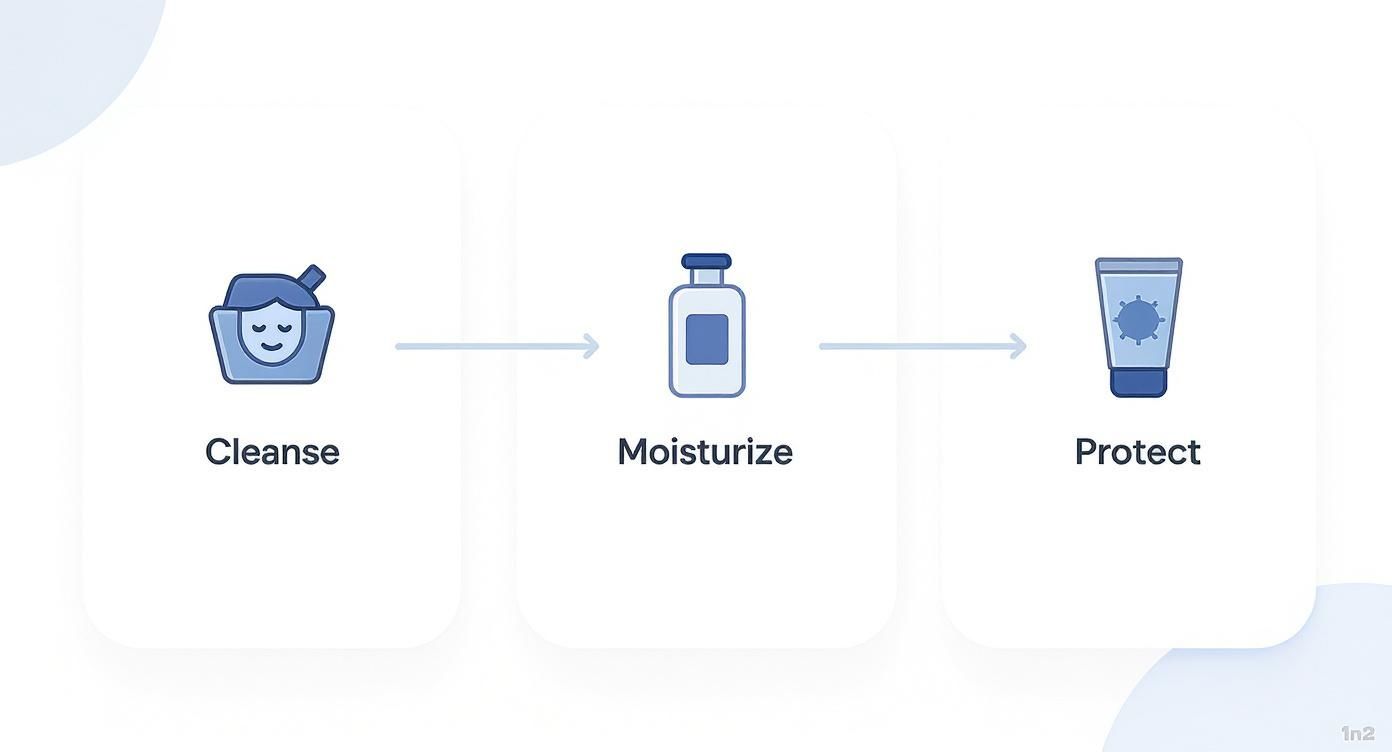
Every solid plan starts with cleansing, is followed by hydration, and—critically for the morning—ends with protection. These are your foundational habits.
Your AM routine is all about prepping your skin for battle. You're putting up a shield against UV rays, pollution, and all the other environmental junk that makes your skin look older, faster. The whole thing shouldn't take you more than three minutes.
First, just a quick wash. A gentle cleanser is all you need to rinse off any sweat and oil that built up while you slept. No need for an aggressive scrub.
Next, you bring in the MVP for fending off environmental damage: an antioxidant serum. A vitamin C serum is the industry gold standard here. It helps neutralize free radicals from the sun and city grime, brightens your skin, and actually boosts the effectiveness of your sunscreen.
After the serum sinks in for a minute, lock everything down with a moisturizer. This creates a barrier to keep your skin hydrated all day. Then comes the most important step: a broad-spectrum sunscreen with at least SPF 30. This is completely non-negotiable. It doesn't matter if it's cloudy or you're inside all day—UV rays go right through windows.
Once the day is over, your skin’s priority shifts from defense to repair. Your PM routine is designed to help it do that job better, clearing away the daily grime and delivering targeted ingredients while you sleep.
Start with a more serious cleanse than you did in the morning. You’ve got to wash away a full day's worth of dirt, sweat, pollutants, and sunscreen. This step gets your pores clean and preps them to actually absorb the products you're about to put on.
Now is the time to bring in your "workhorse"—the one product aimed at your biggest skin issue. This is usually where it pays to invest a little more.
Pick one of these. Never both. Don't try to layer multiple aggressive treatments.
Finally, finish with a solid, nourishing moisturizer. Your skin actually loses more water while you sleep (it's a process called transepidermal water loss), so a good moisturizer helps it stay hydrated and supports that natural repair cycle. Something with hyaluronic acid, for instance, is great because it pulls moisture into the skin, keeping it plump.
A huge mistake guys make is thinking more products mean better results. It's not true. A focused, consistent routine with a few of the right products will always beat a complicated one you can't stick with.
As you build out your routine, it helps to identify your 'Main Character' product. This is the one item you're counting on to tackle your primary skin concern. It’s almost always a serum or treatment because that’s where you find the highest concentration of active ingredients.
Here’s a quick cheat sheet:
| If Your Goal Is... | Your Main Character Could Be... |
|---|---|
| Brighter, more even skin tone | A Vitamin C Serum (AM Routine) |
| Fewer breakouts and clear pores | A Salicylic Acid Treatment (PM Routine) |
| Smoother texture and anti-aging | A Retinol Serum (PM Routine) |
| Intense hydration for dry skin | A Hyaluronic Acid Serum (AM or PM) |
By putting your money into one high-impact product and keeping the basics (cleanser, moisturizer, sunscreen) simple and affordable, you create a system that's both effective and sustainable. This is how to maintain healthy skin without overcomplicating things or draining your bank account.
Your daily routine is the solid foundation, but weekly treatments are the power moves that really level up your skin. Think of your morning and evening steps as maintenance; these weekly resets are for deep cleaning, targeted repairs, and tackling those stubborn issues.
If you're dealing with persistent dullness, clogged pores, or a slick of oil that your daily wash just can’t seem to handle, this is where you make a real difference. Adding just one or two of these sessions a week is a genuine game-changer. It stops the slow buildup of dead skin and grime that leads to breakouts and a rough, tired look over time.
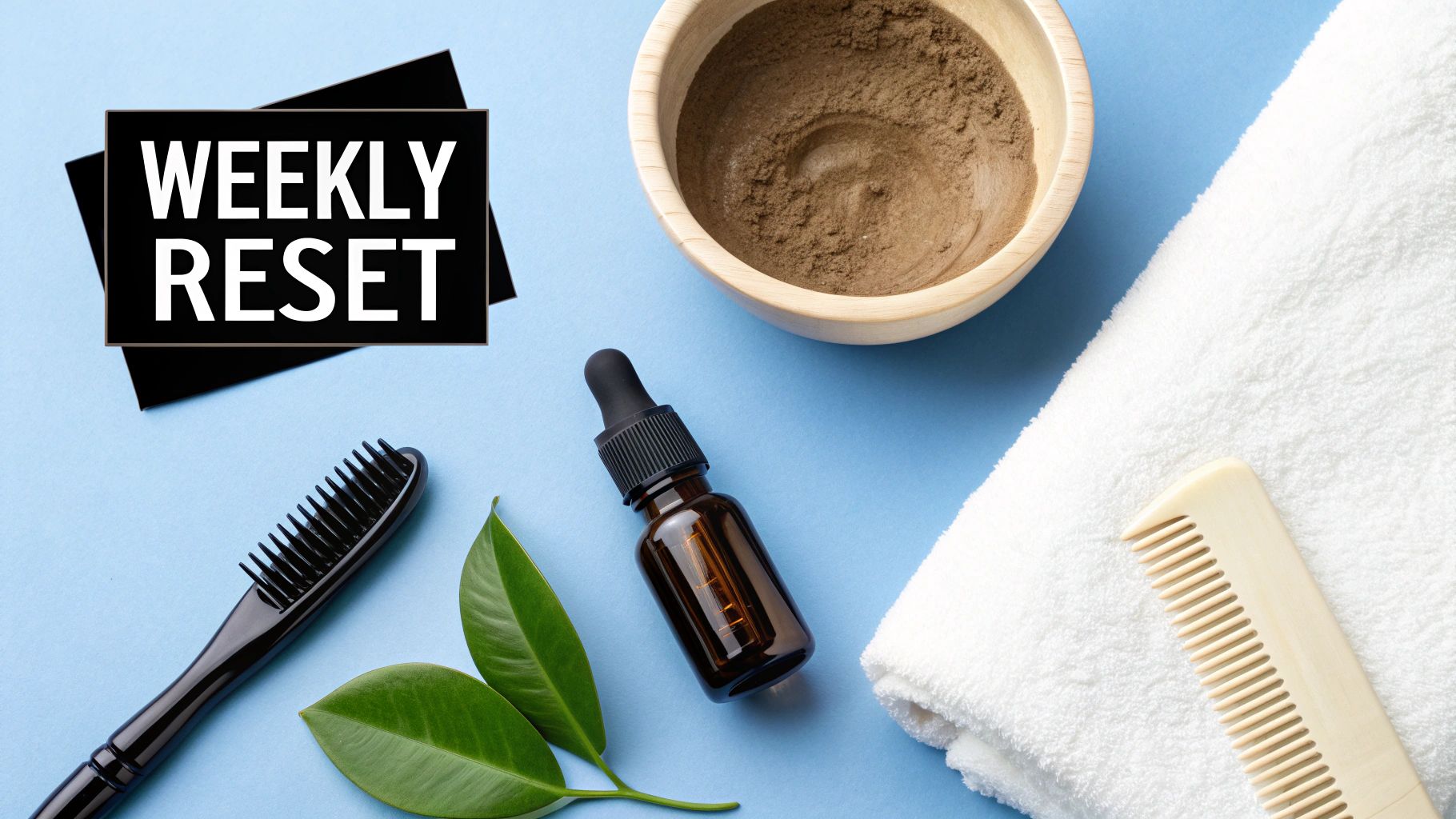
Your skin is constantly turning over new cells, but the old, dead ones can hang around for too long. Exfoliation is simply the process of clearing away that buildup to reveal the fresher, smoother skin waiting underneath. Get this right, and you’ll see brighter skin and way fewer blackheads.
You've got two main ways to get the job done: physical and chemical.
Physical Exfoliants: These are the classic face scrubs with gritty bits like sugar or jojoba beads. They literally buff away dead skin. While it can feel satisfying, it's incredibly easy to go too hard, causing micro-tears in your skin and leaving it red and irritated.
Chemical Exfoliants: A much better route. These use gentle acids—like Alpha-Hydroxy Acids (AHAs) or Beta-Hydroxy Acids (BHAs)—to dissolve the 'glue' that holds dead skin cells together. The result is a more even, less abrasive exfoliation.
For most guys, a chemical exfoliant is the clear winner. AHAs (like glycolic acid) are brilliant for improving surface texture and tackling dullness. BHAs (like salicylic acid) are oil-soluble, which means they can get deep inside your pores to clear out all the gunk. This makes them the holy grail for anyone with oily or acne-prone skin.
To really nail the technique, our guide on how to exfoliate face properly breaks down every detail you need.
A weekly face mask is like calling in a specialist for a specific mission. Instead of a one-size-fits-all approach, you can deploy a targeted treatment for exactly what your skin is dealing with that day. Consider it a 10-15 minute intensive therapy session for your face.
Here’s how to pick your weapon of choice:
Here's a pro tip: Always use a mask after cleansing but before moisturizing. This ensures your pores are clean and perfectly prepped to absorb all the good stuff the mask has to offer.
Rocking a beard? Your weekly routine needs to account for the skin hiding underneath. That area is a hotspot for ingrown hairs, flaky dryness, and the dreaded "beardruff."
When you exfoliate, don't just stop at your beard line. Gently work your chemical exfoliant onto the skin beneath your facial hair. This is crucial for preventing the dead skin buildup that traps hairs and causes those painful, angry bumps.
The same logic applies to masks. You can apply a clay mask around the perimeter of your beard. For the skin underneath, a hydrating mask or even just a quality beard oil applied after you shower will keep everything moisturized and flake-free. This two-pronged attack ensures both your beard and the skin it grows from stay in top-tier condition.
Let's be real: walking down the skincare aisle can feel like trying to decipher an ancient text. Bottles flash a dozen different claims, the ingredient lists are a mile long, and it's tempting to just grab the coolest-looking package and hope for the best.
But learning to quickly scan a label is the single biggest upgrade you can make to your routine. It’s not about becoming a chemist overnight. It’s about knowing what to look for and what to run from.
The global skincare market is on track to hit $162 billion in sales by 2025 and is projected to keep climbing to $222 billion by 2030. With that much cash at stake, marketing is everything. The real story, though, is always on the back of the bottle. You can get more insights on the massive growth of the skincare market over at tricociuniversity.edu.
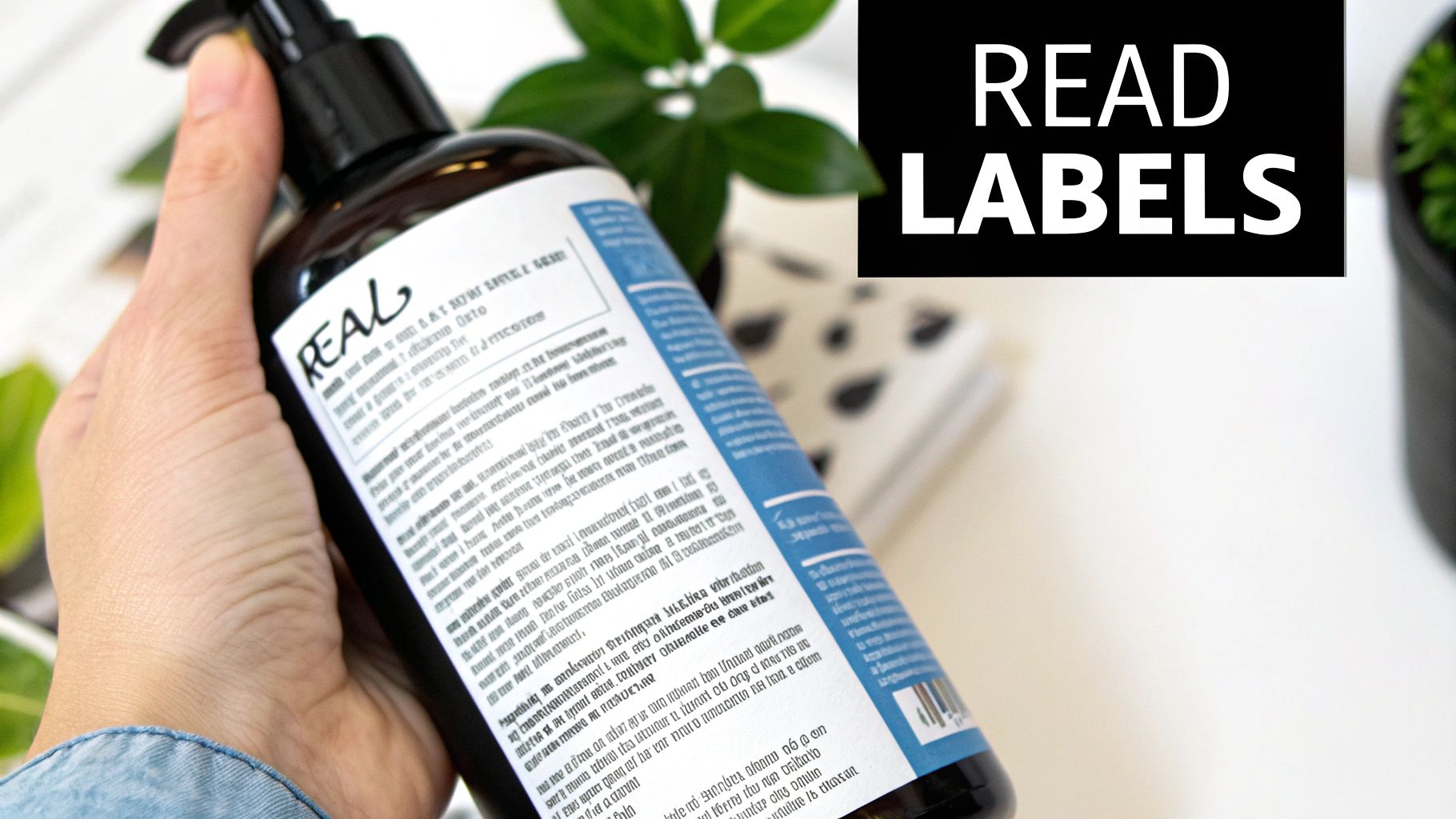
When you flip that bottle over, you’re on the hunt for the "active" ingredients—the stuff that actually does the work. These are your heavy hitters. If you see them high up on the list (ingredients are always listed by concentration), that’s a very good sign.
Here are a few heroes to keep an eye out for:
If you want to keep things simple with products that deliver, check out our guide to natural skin care products for men.
Knowing what ingredients to ditch is just as crucial as knowing which ones to seek out. Some common additives can cause irritation, breakouts, and dryness, completely derailing your progress.
Don't get suckered in by flashy marketing terms. Buzzwords like "dermatologist-tested" or "non-comedogenic" aren't regulated by anyone. The only source of truth is the ingredient list.
First up, be wary of certain alcohols. While some "fatty alcohols" (like cetyl alcohol) are actually beneficial, you want to avoid denatured alcohol or SD alcohol. They show up a lot in toners and acne treatments and can be incredibly drying, stripping away your skin’s natural oils and messing up its protective barrier.
Another big one to watch out for is fragrance. Synthetic fragrances are a leading cause of skin irritation and allergic reactions. If you see "fragrance," "parfum," or "perfume" on the label, it's a smart move to put it back on the shelf, especially if your skin is on the sensitive side.
Here’s a quick cheat sheet to help you sort the good from the bad when you’re in the aisle.
| Ingredient Category | Look For This (And Why) | Avoid This (And Why) |
|---|---|---|
| Hydrators | Hyaluronic Acid, Glycerin. These pull moisture into the skin, keeping it hydrated. | Mineral Oil (in high amounts). It can be pore-clogging for some people. |
| Exfoliants | Salicylic Acid (BHA), Glycolic Acid (AHA). They clear pores and smooth out texture. | Harsh physical scrubs (like crushed nut shells). These can cause tiny tears in the skin. |
| Irritants | N/A | Fragrance/Parfum, SD Alcohol. These are common culprits for dryness and allergic reactions. |
Once you learn to spot a few key names, you’re back in control. You’ll start buying products based on solid science, not just clever marketing. Mastering this one skill is a game-changer for the long-term journey of maintaining healthy skin.
You can drop serious cash on the best skincare in the world, but if your lifestyle is actively working against you, you’ll always be playing catch-up. Great skin isn't just about what you slather on your face; it's a direct reflection of what's going on inside.
Think of it this way: your skincare routine is your offense, actively tackling problems and protecting your skin. Your lifestyle habits? That's your defense, building an internal environment where your skin can just be healthy. When you get both working in sync, you have a real strategy for great skin that lasts.
Ever pull an all-nighter and wake up looking... rough? Puffy, dull, and just plain worn out? That's not in your head. Sleep is your skin's dedicated repair shift.
While you're out cold, your body cranks up blood flow to the skin, which helps rebuild collagen and fix damage from the day's grind—think UV exposure and city pollution.
When you consistently shortchange yourself on sleep, you're essentially canceling that repair shift. This can spike your stress hormone, cortisol, which is a major trigger for inflammation, making things like acne and eczema way worse. Bottom line: aiming for 7-9 hours of solid sleep isn't just a nice idea; it's a non-negotiable part of any serious skincare plan.
What you eat shows up on your face, plain and simple. And one of the biggest culprits for problem skin is sugar.
A diet loaded with sugar and refined carbs can set off a chain reaction of inflammation in your body, which often appears as breakouts and redness on your skin. It also kicks off a process called glycation, where sugar literally attaches to your collagen, making it stiff and weak. That's a fast track to fine lines.
Cutting back on sugar can be a game-changer. There are some incredible benefits of quitting sugar for clearer skin.
But instead of just focusing on what to cut, think about what to add. You want to load up on foods that are your skin's best friends:
"Your skin is a billboard for your internal health. What you eat, how you sleep, and how you handle stress matter just as much—if not more—than any cream you can buy."
Staying hydrated is key, but it’s not about chugging a gallon of water right before bed. Consistent hydration throughout the day helps keep your skin plump and elastic while also flushing out toxins that can dull your complexion. If you wait until you're thirsty, you're already behind.
Just as critical is getting a handle on your stress. When you're constantly stressed out, your body pumps out cortisol, which can send your oil glands into overdrive and compromise your skin's defenses. Find what works for you—hitting the gym, meditating, or just unplugging from your phone for an hour. A solid stress-relief valve can stop breakouts before they even start.
Finally, let's get real about two of the worst things for your skin: smoking and overdoing it on the booze. Smoking literally chokes your skin by constricting blood vessels, starving it of the oxygen and nutrients it needs to look good. Alcohol, on the other hand, dehydrates your entire body and can trigger inflammation and redness. Dialing these back isn't just a suggestion; it's a must-do for genuinely healthy skin.
Even with the best routine, bad skin days happen. It's just a fact of life. A stressful week, a few too many late-night pizzas, or even a simple change in the weather can throw your skin for a loop. Think of this as your game plan for getting things back on track when your skin starts acting up.
First, let's get one thing straight: skin issues are incredibly common. A 2021 global health study reported a staggering 4.69 billion cases of skin diseases worldwide. So, if you're dealing with a breakout or some irritation, you're definitely not alone. You can dive deeper into the numbers and read the full research on skin condition prevalence here.
Knowing this isn't about excusing bad habits; it's about shifting your mindset from chasing flawless skin to becoming a smart problem-solver. Learning how to react when things go sideways is a bigger part of the battle than you'd think.
Ah, the classic one-two punch: persistent pimples and that greasy sheen that shows up around lunchtime. This is almost always a result of your skin producing too much oil, which then clogs pores and creates a perfect home for bacteria. The goal isn't to blast your skin with harsh chemicals, but to gently break that cycle.
Your secret weapon for this is salicylic acid (BHA). It's a fantastic ingredient because it's oil-soluble, which is a fancy way of saying it can get deep down into your pores to clear out all the gunk that causes breakouts in the first place.
And for that oil slick? You need a lightweight, oil-free moisturizer. I know it sounds backward, but trying to "dry out" oily skin just makes your glands panic and pump out even more oil. A simple gel moisturizer will keep your skin hydrated and balanced, telling it to chill out on the oil production.
Nothing kills the confidence of a fresh shave faster than a crop of angry red bumps. Razor burn is just straight-up irritation, while ingrown hairs happen when the hair curls back and grows under the skin. The good news is, both are manageable with a few small tweaks.
Shave after a hot shower. Your skin will be softer and your hair will be easier to cut. And please, use a sharp, clean blade. A dull razor is just asking for trouble—it tugs at the hair instead of slicing it cleanly.
A real game-changer here is swapping out your shaving cream. Those cheap aerosol cans are often loaded with drying alcohols. Instead, get a quality shave cream or gel with soothing stuff like aloe vera. It creates a protective layer between the blade and your face.
If ingrown hairs are your arch-nemesis, a chemical exfoliant is about to become your best friend. A quick swipe with a glycolic or salicylic acid pad a few times a week will keep dead skin from building up and trapping those hairs.
That tight, uncomfortable feeling and those annoying flaky spots usually mean your skin's protective barrier is damaged. It's not doing its job of holding onto moisture. Your mission is to hydrate and repair it without feeling like a greaseball.
First, look at your cleanser. If it leaves your skin feeling squeaky-clean and tight, toss it. You need a creamy, hydrating face wash that cleans without stripping everything away. Then, while your skin is still a little damp, lock in that moisture with the right moisturizer.
Here are the ingredients you want to see on the label:
That trick of applying moisturizer to damp skin is a big one. It traps that extra water before it can evaporate, giving your skin a serious hydration boost and helping to kick those flaky patches to the curb.
Look, I get it. You want to see results, and you want them now. While your skin might feel better—less dry, maybe a bit calmer—almost immediately, the real changes take time. Think of it in terms of your skin's natural cycle.
Your skin cells turn over about every 28 days. This means you need to give any new routine at least a month, but more realistically, you'll start seeing significant improvements in clarity and texture within 4-8 weeks. Patience and consistency are your two best friends here.
Yes. Full stop. This is one of the biggest misconceptions I hear.
Those UVA rays responsible for premature aging and skin damage slice right through glass. So whether you’re driving to work or sitting by a window in your office, your skin is getting hit. Making sunscreen a non-negotiable daily habit is the single best thing you can do for your skin's future health.
Not necessarily, and often, not at all. A high price tag can be more about fancy packaging, marketing budgets, and brand prestige than what's actually in the bottle.
The secret is to ignore the price and learn to read the ingredient list. Many drugstore or direct-to-consumer brands use the exact same effective, science-backed ingredients as their luxury counterparts. Focus on what it's made of, not what it costs.
Ready to stop guessing and build a routine with products that are genuinely effective? Main Character cuts through the noise with straightforward, high-quality essentials designed to get the job done.
Take control of your skin's health and start your journey with Main Character.

05.12.2025
How to Stay Focused at Work 7 Actionable Tips
04.12.2025
A Guide to Shaving with Sensitive Skin
03.12.2025
Best Grooming Products for Men A Definitive Guide
02.12.2025
How to Build Confidence for Men: Practical Guide
01.12.2025
Face Lotion With SPF Your Guide to Daily Skin Protection
30.11.2025
Natural Skin Care Products Men Can Trust
28.11.2025
what causes dark circles under eyes: tips and fixes